
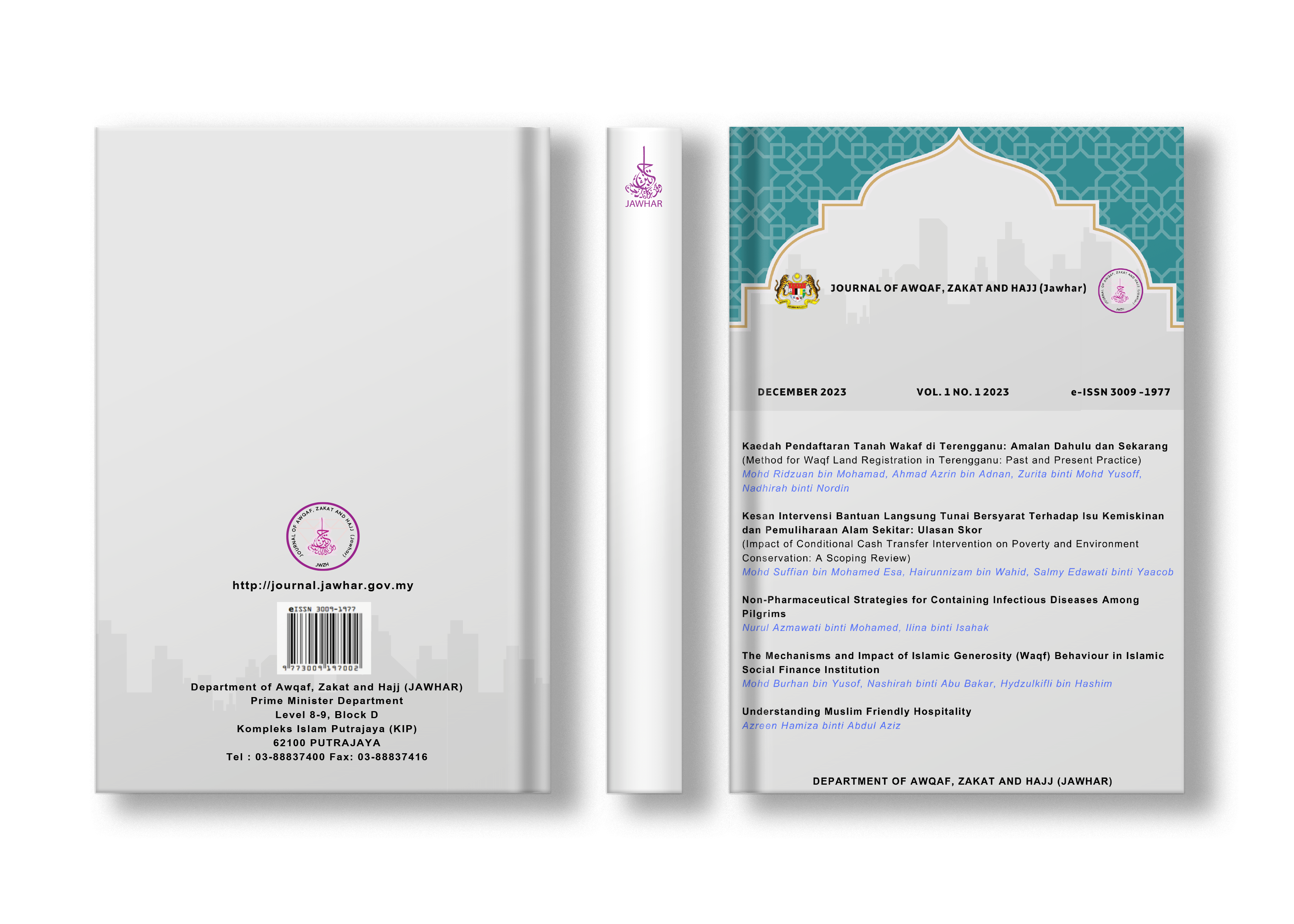
Pelaksanaan Badal Haji: Isu Kontemporari dan Penyelesaian Berasaskan Maqasid al-Shariah
Modelling Halal Governance in Malaysia: Towards a Credible and Adaptive Conceptual Framework for Global Positioning
Author
Ahmad Naqiyuddin Bakar
Faculty of Administrative Science & Policy Studies (FSPPP), UiTM, Shah Alam, Malaysia

DOI : https://doi.org/10.65404/JAWHAR.401008
Keywords :
Halal Governance, Regulatory Reform, Institutional Trust, Shariah Integrity, Federalism, JAKIM, Shariah-based
Abstract :
The halal industry has become a central pillar of Malaysia’s socio-economic and religious landscape, firmly positioning the nation as a global player in the halal economy. Yet, persistent concerns about certification integrity, transparency and regulatory fragmentation continue to challenge its credibility. Allegations of certification fraud, overlapping institutional authorities, and challenges in gaining international recognition have reignited debates on the system’s adequacy and the competitiveness of Malaysia’s halal governance framework.
This study adopts a conceptual and systematic literature review approach, synthesising academic literature, policy documents and institutional reports on halal governance, regulation and certification. Drawing insights from the experiences of Indonesia, the Gulf Cooperation Council (GCC) and selected Western contexts, this paper explores alternative approaches to modelling halal governance in Malaysia through the lens of governance theory and sectoral practice. It identifies five possible frameworks, namely Shariah-based, corporate, trustee/regulatory, stakeholder and hybrid model followed by a critical assessment of their respective merits and limitations. Rather than advocating a single universal model, the study advances a context-responsive hybrid framework that integrates Shariah legitimacy with administrative efficiency, stakeholder accountability, and public trust.
By situating Malaysia’s experience against comparative governance practices abroad, the paper underscores the urgency of continuous institutional reform and adaptive innovation. Ultimately, it argues that Malaysia’s long-term global leadership in the halal domain depends not only on the credibility of its certification regime but also on embedding transparency, professionalism and technological advancement into its governance architecture.

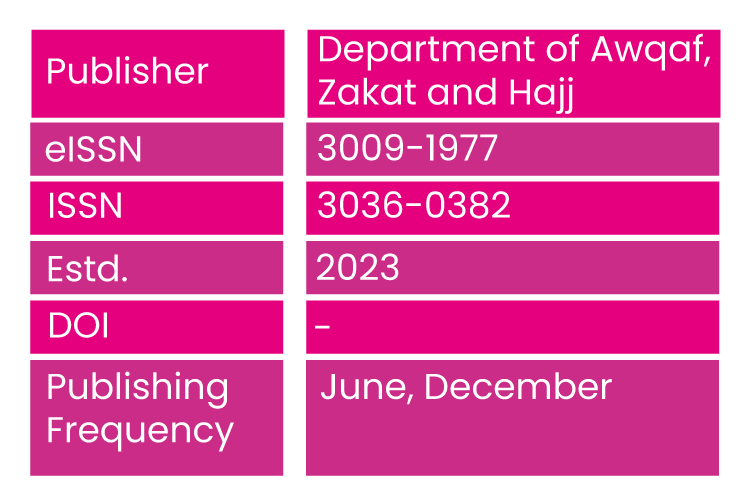
Journal Specification
The Journal of Awqaf, Zakat, and Hajj (Jawhar) is registered in MyJurnal, an online system by the Citation and Infometric Division, the Higher Education Department, MoHE. MyJurnal indexes Malaysian journals and provides bibliographic data and full-text articles across various disciplines, including Arts & Humanities, Engineering & Technology, Medical & Health Sciences, Sciences and Social Sciences.